


Watch my full documentary on YouTube.
In a Laughlin, Nevada, conference room, a group gathered to share their abduction stories. For two hours, they swapped accounts of otherworldly beings and strange craft. One man remained silent until the very end. When he finally spoke, he asked a single question. Has anyone else had odd experiences involving owls? Every hand in the room went up.
This moment, recorded in Mike Clelland’s book The Messengers, captures a strange through-line in the fabric of alien encounter narratives…the recurring presence of owls. Unlike the diverse descriptions of extraterrestrial beings, owl sightings appear with striking consistency across accounts, most famously recounted by Whitley Strieber. Yet, in the broader discourse on UFOs and disclosure, these elements often go unexamined, overshadowed by pursuits of tangible evidence like physical artifacts or verifiable data. What owls offer is a glimpse into the perceptual and psychological dimensions of these interactions, suggesting that the entities involved may shape human memories in deliberate ways.
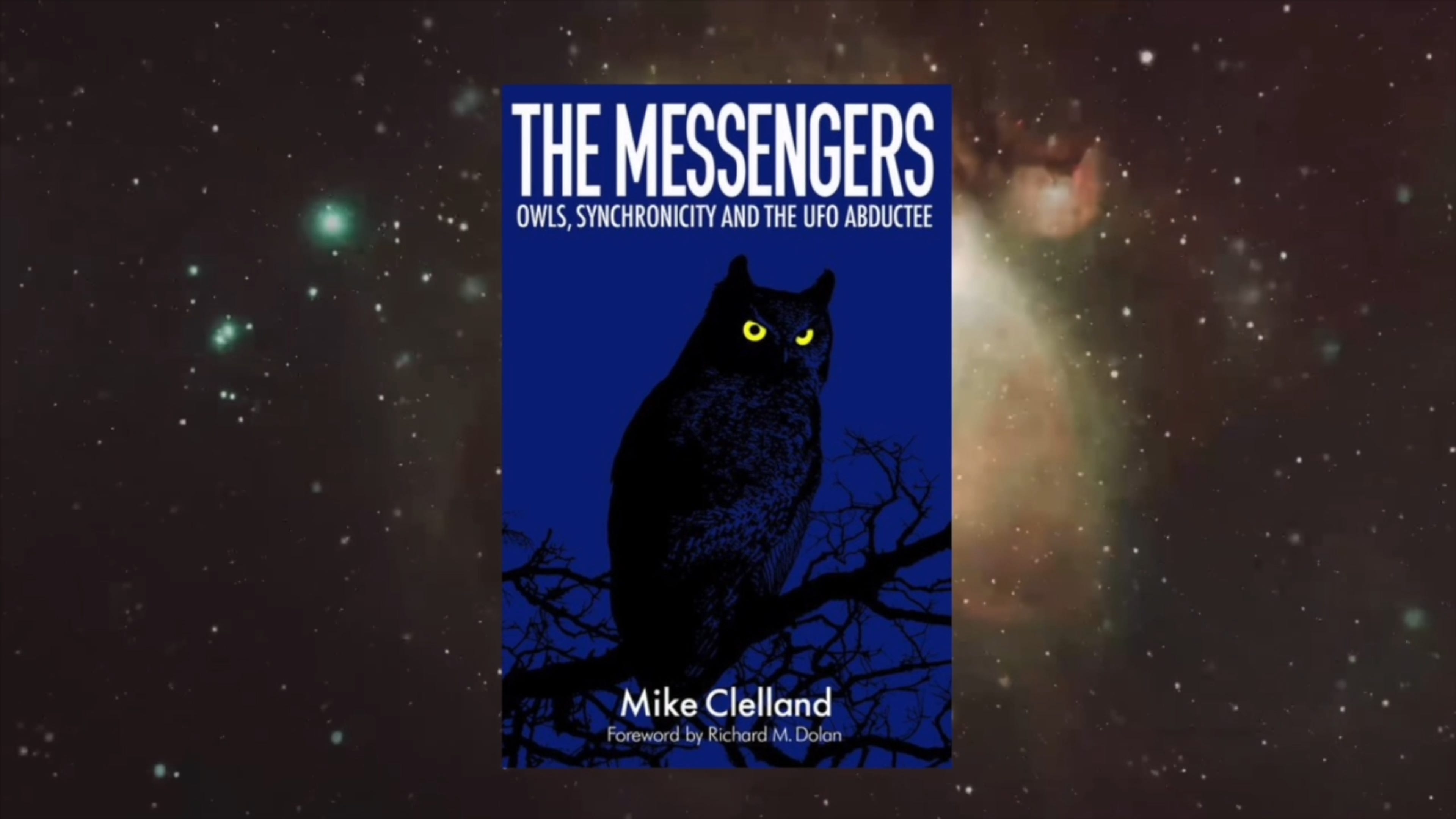
In the book, Clelland shares personal accounts that highlight how owls frequently serve as what researchers term “screen memories” or substitute images overlaid on actual events to obscure or soften the reality. As an example, Clelland tells the story of a man in Louisiana who was sitting on his porch late one night. He notices movement at the edge of his property. At first, it seems like shadows shifting in the branches, but as he approaches, pale forms emerge. He counts fifteen or twenty owls perched in a single tree, all staring directly at him.
As you would expect, this sighting stuck with the man. So much so, he went home and sketched the owls from memory to show a local game warden. Upon looking at the drawings, the game warden responded, “There aren’t owls that big here. If that’s what you saw, something is wrong with your memory.” The comment bothered the man so much that he later sought hypnotic regression therapy to reexamine his memory. Under hypnosis, the therapist urged him to remember the owls. After a pause, he says, “Those aren’t owls.” His memory immediately dissolved and a new memory replaced the one he had. He was no longer looking at owls. He was standing alone in the darkness surrounded by 3 grey aliens.
Memory transformations like this are not isolated. Clelland’s book recounts hundreds of similar cases where owls initially mask encounters with otherworldly beings. In another story, a couple is driving at night along a remote country road. They were completely alone. Suddenly, three small figures appear on the side of the road. The woman perceives them as children in ghost costumes. Her boyfriend remembers them as giant white owls.
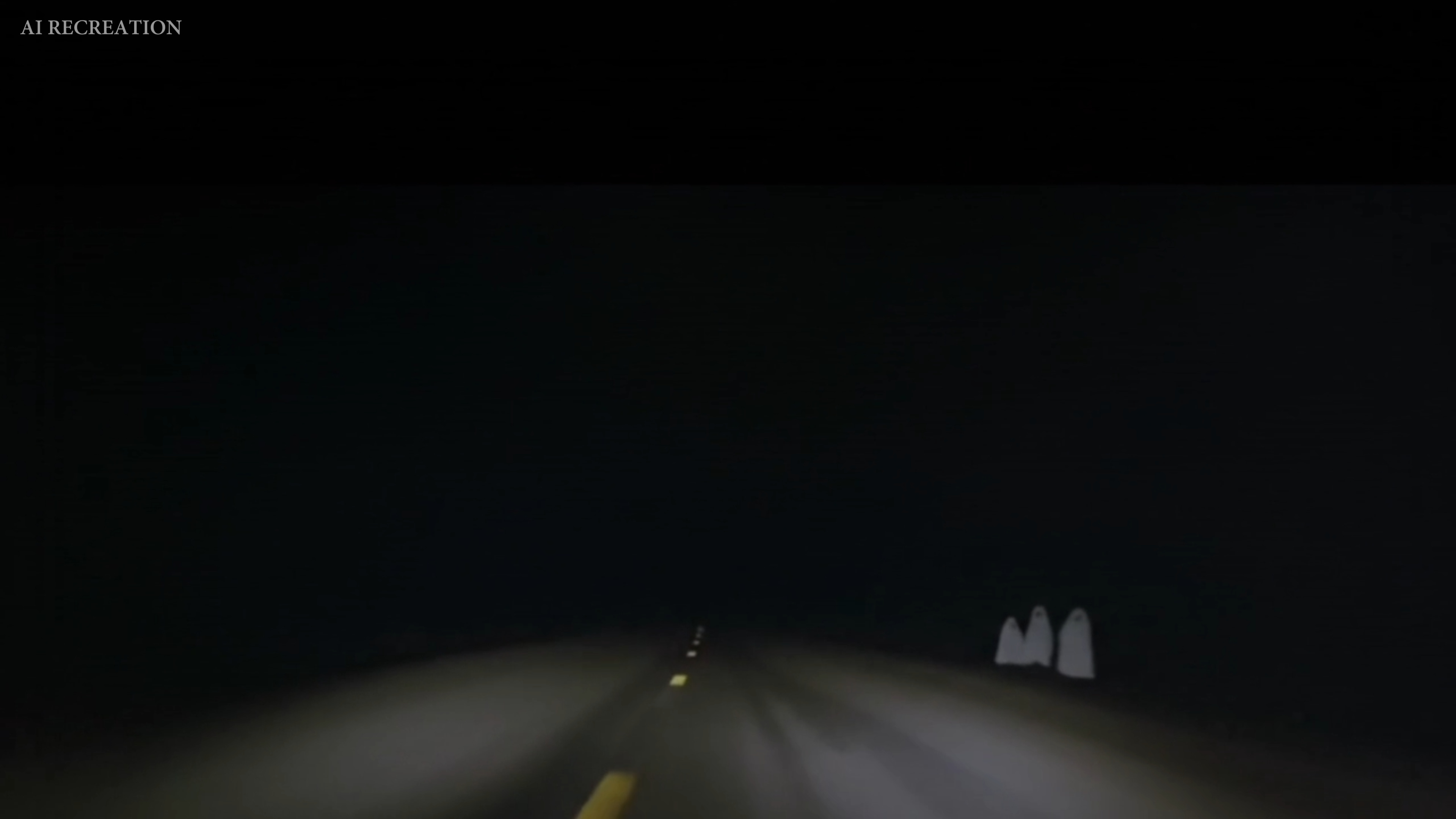
This shared event, remembered so differently, underscores the malleable nature of perception in these encounters. The entities personalize memories based on the individual. They create custom stories that align with personal expectations or fears. To me, the choice of owls appears intentional. These beings are leveraging a symbol already embedded in human consciousness. If the goal was complete erasure, the beings could wipe the memory clean or replace it with something mundane. Instead, they implant something anomalous like oversized owls in improbable numbers or settings. Instead, they implant slightly strange memories, ensuring the memory persists.
Owls also appear as precursors to sightings, almost like harbingers. Clelland tells the story of a camper in Arizona who noticed an owl staring at him from a nearby tree. Each time he alerts his friend of the owl, the bird flies away, only to return and resume its staring, once the friend has looked away. After its final departure, both men witnessed a massive black triangular craft gliding silently across the sky. Similarly, in the 1990s, crop circle investigator Bert Jansen in Wiltshire, England, observes a glowing orb drifting across a field before vanishing into an old shed. Upon entering the shed, he discovered a nest of baby owls, which is an odd, and slightly anticlimactic, resolution to this strange story.
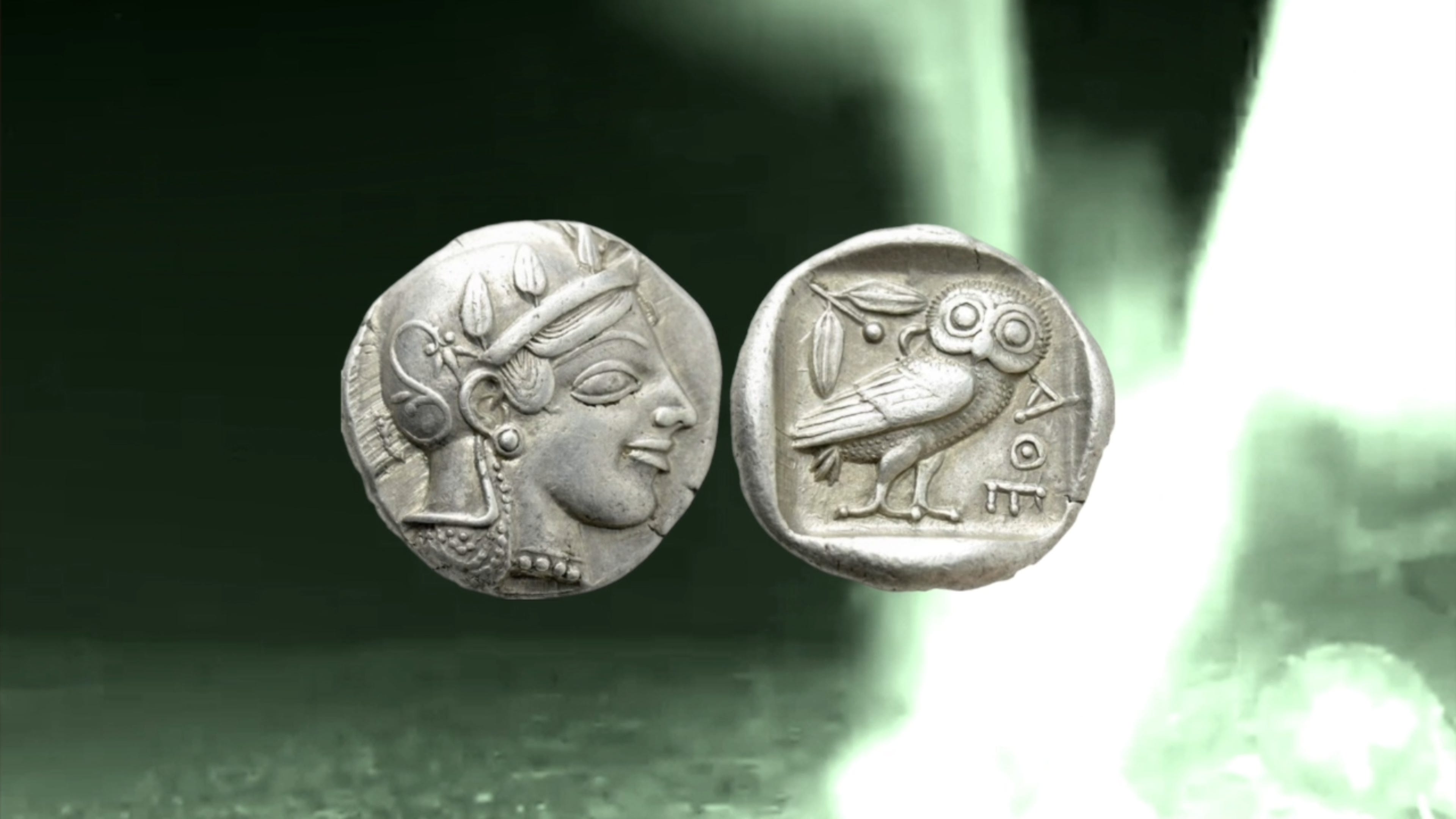
However, these stories challenge the straightforward interpretations of the UFO phenomena. They suggest that the beings involved draw from humanity’s existing symbolic lexicon rather than inventing new ones. Owls have occupied a liminal space in cultural mythologies for millennia which bridge the gap between the mundane and the mystical. In ancient Greece, the owl was Athena’s companion, which was emblematic of her wisdom and foresight. Greece even minted coins that bore the owl’s image alongside Athena. In Roman lore, they cast the owl as a harbinger of death. Ancient writers even linked owl cries to the assassination of Julius Caesar.
Indigenous traditions come to a similar conclusion. Amongst the Cherokee, the great horned owl is connected to witchcraft and mortality. In medieval Europe, owls are featured in ritual manuals and folklore as inhabitants of the underworld. Villagers would nail the corpses of owls to their doors as wards against evil. Across these disparate cultures, owls consistently embody a threshold between realms.
Even in contemporary elite circles, the owl retains this potent symbolism. At Bohemian Grove, where the world’s elite meet annually, a forty-foot stone owl statue is the center of their activities. Robed participants perform the “Cremation of Care” ritual before the owl, where they burn an effigy for prosperity. In this ritual, the owl represents Moloch, the Canaanite god famous for child sacrifice and power. What matters, as it pertains to this story, is the deliberate invocation of the owl as a conduit to deeper, forbidden, knowledge.


This historical pattern implies that if inter-dimensional entities were seeking to signal an encounter’s “otherness”, owls provide a ready-made archetype. They evoke a sense of the uncanny without overwhelming terror. They plant a seed of doubt that spreads like a virus over time. The memory becomes a puzzle, where the experiencer is missing the final piece. The memory is never erased, but it is encrypted, inviting gradual contemplation. The memory acts as a reminder that something has happened. They conceal the event while revealing the concealment.
I believe that this approach completely reframes the concept of “disclosure” in UFO studies. The public demand for revelation assumes that a truth has been withheld. Whether that is in the form of government files, crash debris, or unambiguous footage, we assume that the truth is guarded by humans who have the answers. But these stories suggest otherwise. The phenomenon stages its own unveiling, doling out fragments on its own terms. Experiencers never receive clarity. They get symbolic downloads and dreams. The public gets blurry videos and promises that the REAL information will be coming soon. Governments and researchers may grasp pieces, but no one holds a complete, unadulterated copy.
The implication extends to our understanding of reality itself. If perceptions can be so readily manipulated, then trust in our own sensory experience erodes (hello AI). These beings, whatever their nature, operate in a realm where truth is not a fixed entity but a constructed one, tailored to human cognition’s limits. We don’t encounter the phenomenon in its raw form. Our vision is mediated. We are children sitting in front of a TV screen absorbing whatever is put in front of our eyes.
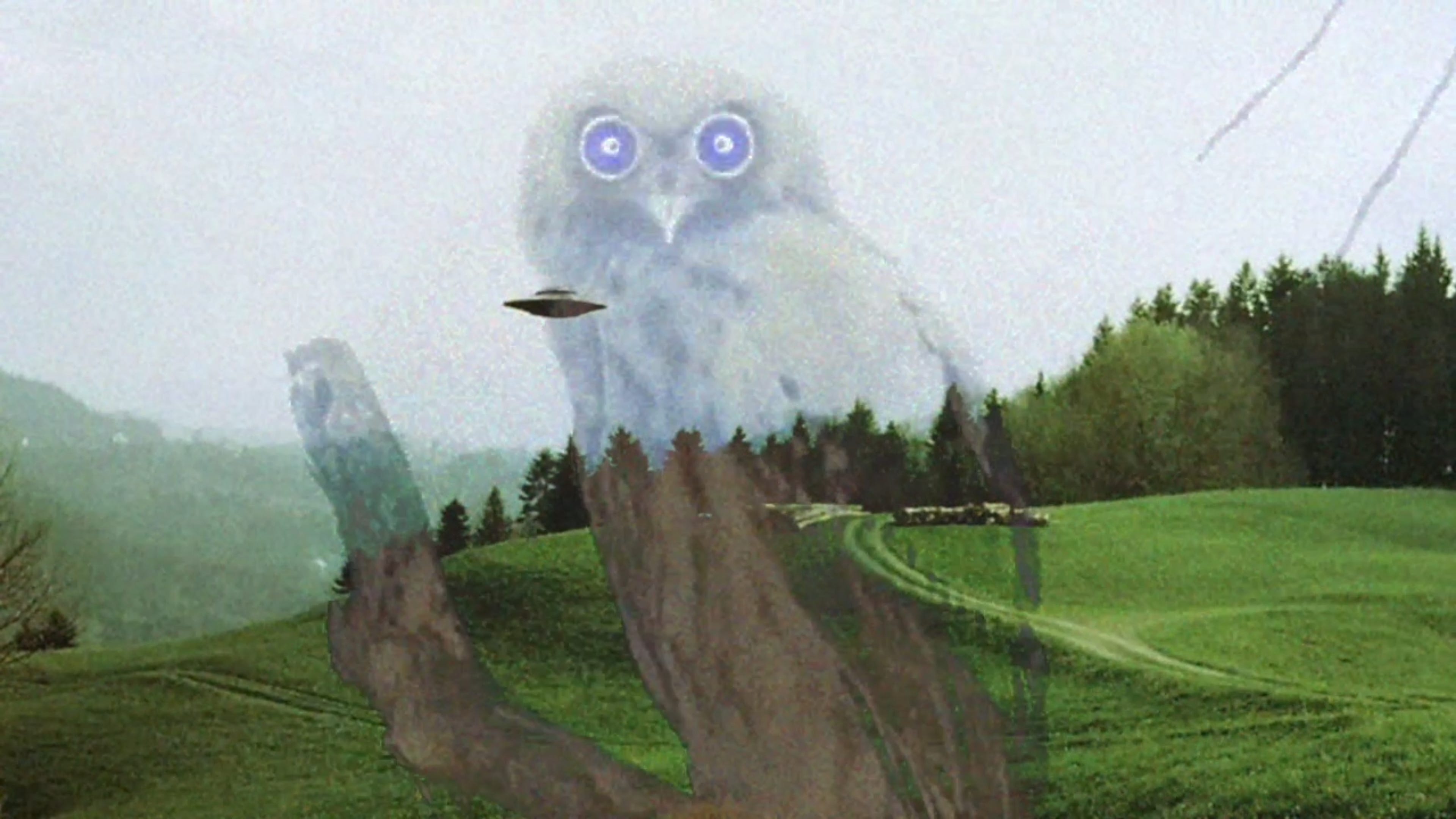
The consistency of owls across cultures and eras points to a deep-seated human recognition of the symbol’s power. Yet in modern encounters, it serves a new purpose. It is a gentle prod toward awareness, without the shock of full exposure. Perhaps this is mercy and preparation. But there is a more frightening possibility; it is about control. It is flex of power. These stories remind us that the boundary between the ordinary and the extraordinary is thinner, and more permeable, than we assume.


